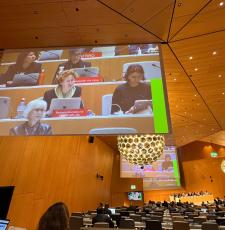
Ugne Lipeikaite, EIFL Public Library Innovation Programme Impact Manager, highlights public library initiatives in Ghana to support students preparing for exams.
Inspired by experiences gained through the ‘Digital Learning @ Ghana Libraries’ project, public libraries all over Ghana are integrating digital skills training and learning activities into their services and programmes, including coding clubs, digital reading marathons, online safety campaigns and gaming festivals to name just a few. Over the past couple of months, the libraries concentrated on initiatives that aimed to support thousands of students preparing for upcoming school exams in May – in particular, the Basic Education Certificate Examination (BECE) that determines progress to senior school.
The libraries drew on training experience, digital skills and strengthened partnerships with regional and district education officers and schools gained through their participation in the project that EIFL implemented with its partner, the Ghana Library Authority, from September 2023 to May 2026.
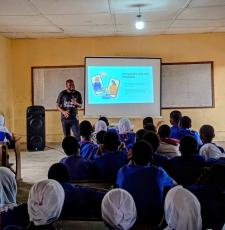
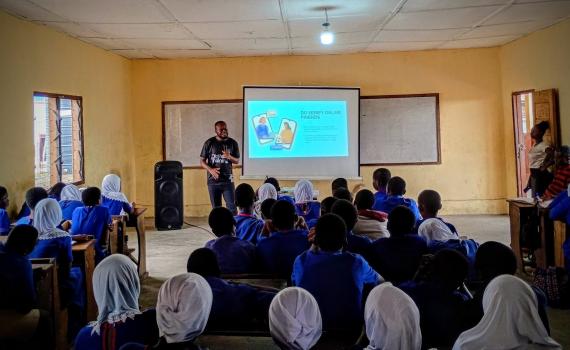
Ashanti Regional Library was one of the 15 regional and district libraries that participated in the project. In the run-up to the BECE, Ashanti Regional Library conducted daily outreach visits to 22 junior high schools in Ashanti Region, engaging 1,360 BECE candidates (683 boys and 677 girls) in highly interactive digital learning sessions designed to build academic skills and confidence.
For their BECE preparation initiative, the library worked in partnership with the Kumasi Metropolitan Directorate of Education, which granted permission to work with schools in the Kumasi metropolitan area. A Ghanaian educational technology start-up, Scratch Technologies, provided the library with a portable UPS (Uninterrupted Power Supply) kit to cope with possible electricity outages during school visits.
With their partners, the library organized and delivered learning sessions related to key BECE subjects: ICT, Science and English. Under the banner, ‘60 Minutes to BECE Victory – The BECE Digital Power Hour’, the sessions featured live Kahoot-powered quizzes with over 1,000 potential BECE questions, practical exam tips, and smarter approaches to studying using digital tools, for example, how to use mobile phones and tablets productively for learning and revision rather than distraction. Ethical use of artificial intelligence (AI) in learning and examinations and academic honesty were also included in sessions.
At the same time, Ashanti Regional Library continued to offer more in-depth digital skills and online safety training, where students learnt a wider range of skills: responsible technology use, preventing cyberbullying; creating strong passwords, managing digital footprints and much more. Beyond academic preparation, the outreach sessions also included motivational talks, counselling, mentorship, and confidence-building activities aimed at helping students overcome examination anxiety and fear.
A memorable learning experience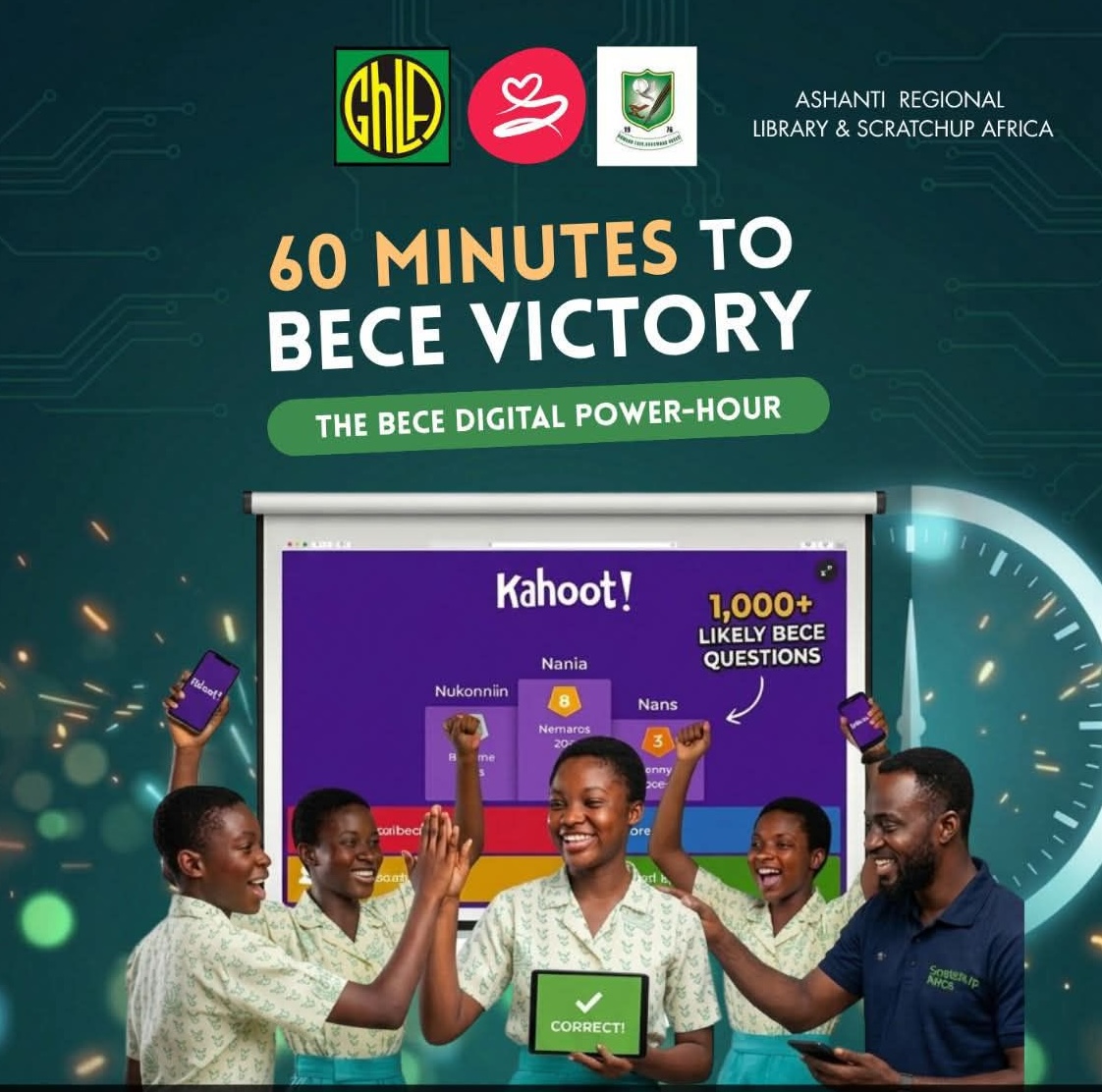
The combination of traditional teaching methods with technology, gamification and competition made learning engaging and memorable.
“The engagement with the students this afternoon has really been very helpful. It has boosted the confidence of the students, the teachers, and even myself as the head teacher. The children have also become more aware that we have ICT tools in the school that they can learn from and use for their studies,” said the Headmaster of State Experimental Basic School 2.
“Initiatives like this help children learn how to use technology and their phones in the right and responsible way. Although these may seem like small activities, they are very useful and truly in the best interest of the children,” said the Headmistress of St. Augustine Anglican Junior High School. The students from the same school also expressed great enthusiasm and assured librarians that the classes had prepared them mentally and academically to excel and secure spots in their dream senior schools.
After sessions at Akosa M/A Junior High School and St. Paul’s Anglican International School, students also displayed confidence and readiness to face the BECE. “It was competitive and enjoyable, we need more training like this,” said one student.
“Using digital tools to solve BECE questions is the best approach for learners,” enthused a BECE candidate at Amankwatia M/A Junior High School ‘B’.
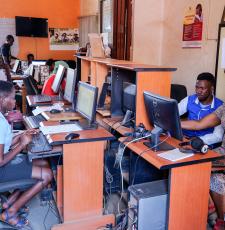
The BECE officially concluded in the second week of May, and now several libraries are offering digital learning workshops while the students wait for their results. Effutu Municipal Library and six other libraries in the Effutu District in Central Region, for example, have launched a two-month digital learning workshop focused on building practical digital skills that will come in handy when students start senior high school. Topics covered include the Microsoft Office suite, online safety, the use of AI in education, misinformation and disinformation, and graphic design using Canva.
The Digital Learning @ Ghana Public Libraries project, implemented by EIFL and the Ghana Library Authority (GhLA) built the capacity of 30 librarians and ICT coordinators at 15 regional and district public libraries to organize and deliver digital skills classes in schools and in-depth workshops in libraries. By May 2026, the project had directly benefited more than 21,000 students. The project was supported by the Internet Society Foundation through the Strengthening Communities, Improving Lives and Livelihoods (SCILLS) grants programme.
SHARE / PRINT


RECENT BLOGS